
Dental Crowns in Winter Park FL
Dental Crowns
OR CALL (407) 678-8848
CROWNS
Dental Crowns
Whether you have a tooth that is weak, broken, discolored, or misshapen, our dentists at Smile Center of Orlando can cap it with a dental crown. This dental restoration covers and protects the visible surface of a tooth while blending in with the rest of your beautiful smile. Set up an appointment with our dentists to learn more about dental crowns. If your concern is primarily discoloration without structural damage, professional teeth whitening may be the right starting point.
What are Dental Crowns?
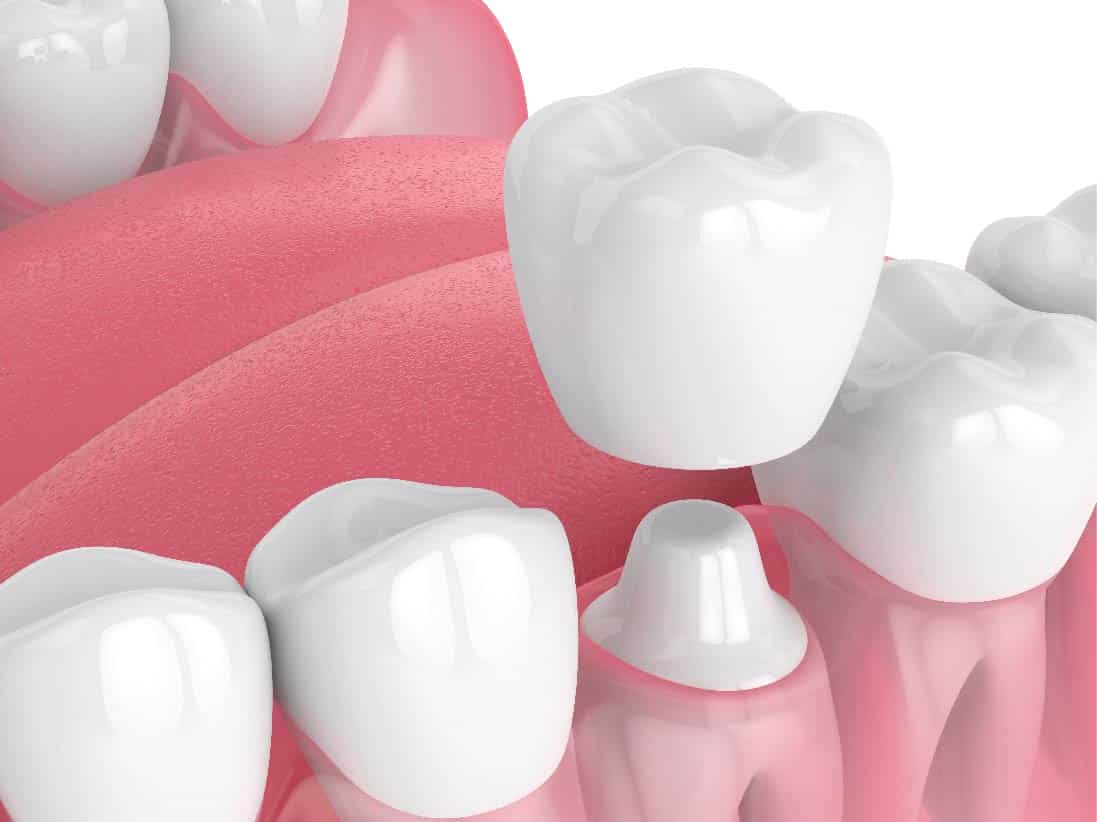
A dental crown, or cap, is a restoration that can be used for a number of purposes. One of the most common uses of a dental crown is to restore a tooth that is significantly damaged or decayed. The crown is custom made to fit over the entire tooth, starting at the gum line, in order to restore the tooth to its original shape and size. Dental crowns can be made of gold, porcelain, or porcelain fused to metal. Porcelain crowns are popular because they match the natural color and appearance of your teeth. For purely aesthetic concerns without structural damage, porcelain veneers may be a less invasive alternative. Our dentists will help you determine which type of dental crown is right for your smile. Both Dr. John Altomare and Dr. Mirna Rezkalla personally evaluate every case to ensure the best material and fit for each patient at Smile Center of Orlando. Ask about our dental membership plan for savings on restorative dentistry.
Your smile may benefit from a crown if a tooth is damaged or decayed to the point that a dental filling will not provide a successful restoration. Crowns can also be used for a number of other restorative and aesthetic purposes, including:
- To protect a tooth following root canal treatment
- To anchor and attach a dental bridge
- To cover and complete a dental implant
- To enhance the beauty of your smile
- To improve a misshapen tooth
- To strengthen a tooth that is fractured or weakened
- To support a large filling when little natural tooth structure remains

Use of Innovative Technology
All procedures are furnished with state of the art equipment and maintained at the highest standards.

High Treatment Success Rates
Our treatments are performed by skilled dentists based on today’s standards of care, which promotes the best treatment outcomes.

Years of Dental Experience
With many years of dental experience, we are experts in all facets of dentistry. You will receive the best care available. Whether you need dental implants, Invisalign, or dentures, our team offers comprehensive solutions for every smile.
If a tooth is too damaged for a crown alone, a dental implant with crown is often the longest-lasting alternative — see our dental implants in Orlando page for the full comparison.
Crown Aftercare and Related Restorations
Some patients experience mild sensitivity in the days after a new crown is placed. Our guide on what to expect after a crown walks through the common causes and when to call the office. For patients with one or more missing teeth between healthy anchors, dental bridges are often a faster, more economical alternative to implants and use the same lab process and materials as our crown work.
Dental Crowns Orlando: Treatment Options for Damaged or Weakened Teeth
For patients researching dental crowns Orlando providers fabricate, modern crown options have expanded dramatically over the past decade. At Smile Center of Orlando, our Orlando dental crowns workflow begins with a thorough exam: Dr. Rezkalla evaluates the tooth’s structural condition, whether the underlying tooth has had root canal treatment, the position of the tooth in your bite, and aesthetic priorities before recommending a crown type. The same-day CEREC technology now available means many dental crowns Orlando patients receive can be designed, milled, and placed in a single visit instead of the traditional two-visit, two-week process.
The most common reasons we place crowns at our Winter Park dental crowns office: protecting a tooth after root canal treatment (a back tooth without a crown can crack under bite forces), restoring a tooth with extensive decay that exceeds what a filling can hold, covering a damaged or worn-down tooth to restore both function and appearance, capping a dental implant as the visible “tooth” portion of the restoration, and cosmetic improvement of severely discolored or misshapen front teeth. Each situation is reviewed individually so the crown type matches the clinical need.
Crown Material Options: Porcelain, Zirconia, and Same-Day CEREC
Porcelain crowns Orlando patients receive remain the gold standard for front-tooth aesthetics — the translucency and shade-matching capabilities of modern dental porcelain make them nearly indistinguishable from natural teeth. For back teeth where bite force is high and aesthetics are secondary, zirconia crowns Orlando dentists place are increasingly preferred because zirconia is one of the strongest dental materials available — a zirconia crown will withstand the cyclic chewing forces of molars for decades and rarely chips or cracks.
CEREC same-day crowns Orlando patients now request are made from a high-grade ceramic block that is milled chairside in our office while you wait. The full process — digital scan of the prepared tooth, computer-aided design of the crown, milling, glazing, and bonding — takes approximately two hours. CEREC same-day crowns Orlando residents value highly because there is no second visit, no temporary crown to manage for two weeks, and no impression goop. The aesthetic and clinical outcomes are equivalent to lab-fabricated crowns for the vast majority of cases. For complex cases with multiple crowns, anterior aesthetic concerns, or specific shade-matching requirements, we still prefer lab-fabricated crowns where the dental ceramicist can refine each crown’s individual shade gradient and surface texture by hand.
Implant crowns Orlando patients receive — the visible “tooth” portion that screws or cements onto a dental implant — follow the same material principles. Porcelain over a metal substructure or full zirconia for back-tooth implant restorations, and high-translucency porcelain or layered zirconia for front-tooth implant restorations.
Dental Bridges Orlando: When a Bridge Is the Right Choice Over an Implant
Dental bridges Orlando providers offer remain a strong option for replacing a missing tooth or a short span of missing teeth, particularly when the adjacent teeth are already compromised and would benefit from crowns regardless. A traditional dental bridge uses crowns on the teeth on either side of the gap as “anchors” (called abutment teeth) to support a false tooth (called a pontic) that fills the gap. The entire bridge is bonded or cemented as a single unit, so it feels and functions like fixed teeth from day one — no removal needed.
When to choose a bridge over a dental implant: the adjacent teeth are already damaged, decayed, or have failing fillings that would benefit from crowns anyway (in which case the bridge gets you three restorations for the price of three crowns plus a pontic), the patient has bone density too low for an implant without bone grafting, the patient prefers a faster timeline (a bridge can be completed in two to three weeks versus four to six months for an implant + restoration), or budget is a consideration since bridges are typically less expensive than implants.
When to choose an implant over a bridge: the adjacent teeth are pristine and intact (cutting them down for crowns would damage healthy structure), the missing tooth is at a critical bite position where long-term durability matters most, or the patient prioritizes the longest-lasting option since implants frequently last decades with proper care while bridges typically need replacement every ten to fifteen years. Dr. Rezkalla walks through the crown vs bridge Orlando comparison with each patient based on the specific tooth, the condition of the adjacent teeth, and the patient’s priorities.
The Dental Crowns Orlando Process: What to Expect Visit by Visit
For traditional lab-fabricated crowns, the dental crowns Orlando workflow takes two visits over approximately two weeks. Visit one is the preparation visit: the tooth is anesthetized, decay or old restoration material is removed, the tooth is shaped to accept the crown (this requires removing a thin layer of healthy tooth structure to make room for the crown’s thickness), digital impressions are taken, and a temporary crown is placed. The dental lab fabricates the permanent crown over the following one to two weeks, custom-shaded to match adjacent teeth. Visit two is the delivery visit: the temporary is removed, the permanent crown is checked for fit and shade, then bonded permanently in place.
For CEREC same-day crowns, the entire process is consolidated into a single appointment of approximately two hours. The tooth is prepared the same way, then digitally scanned chairside. The crown is designed on our CEREC computer in real-time, milled from a ceramic block, glazed for polish and shade refinement, and bonded to the tooth — all in the same visit. Most patients walk out with the permanent crown in place the same day. Implant crowns Orlando follow a slightly different timeline because the implant must integrate with the jaw bone for three to four months before the final crown is placed, but the crown fabrication itself can use either the traditional or CEREC pathway.
FAQ: Dental Crowns Orlando Patients Ask
How long do dental crowns last? Modern porcelain and zirconia dental crowns Orlando patients receive typically last ten to fifteen years or longer with proper care. The crown itself is essentially indestructible under normal use — what fails over time is the cement bond at the margin, decay of the underlying natural tooth structure, or fracture of the underlying tooth (not the crown itself).
Do dental crowns require special care? No special care beyond standard oral hygiene — brush twice daily with fluoride toothpaste, floss daily (carefully at the crown margin where the crown meets the natural tooth), and maintain six-month professional cleanings. Avoid chewing ice, hard candy, or popcorn kernels directly on the crown to prevent rare cases of porcelain chipping.
Will a dental crown feel like my natural tooth? After a brief adjustment period of three to seven days, most patients report no perceivable difference. Modern crowns are designed to match the contour and bite of the natural tooth they replace, with minor bite adjustments made at the delivery appointment to ensure perfect harmony.
Can a dental crown get a cavity? The crown itself cannot decay — it is made of ceramic or zirconia. However, the underlying natural tooth structure at the margin (where the crown meets the natural tooth at the gum line) can still develop decay if oral hygiene is inconsistent. This is why careful flossing at the margin and regular professional cleanings remain important.
What is the difference between a crown and a bridge? A crown covers a single damaged tooth. A bridge spans a gap where one or more teeth are missing, using crowns on the teeth on either side of the gap as anchors. Bridges are essentially three or more connected crowns with the middle one(s) replacing the missing tooth.
Can I get a crown the same day? Yes — CEREC same-day crowns Orlando patients request are designed, milled, and bonded in a single two-hour appointment. The aesthetic and clinical outcomes are equivalent to lab-fabricated crowns for most cases.
Will I need a root canal before getting a crown? Not necessarily. Root canals are required only when the underlying tooth pulp is infected or severely inflamed. Many crowns are placed on healthy or recently restored teeth without root canal treatment.
Are dental crowns covered by insurance? Most dental insurance plans cover crowns at 50% after deductible when the crown is medically necessary (replacing a fractured tooth, covering a root-canaled tooth, restoring a tooth with severe decay). Purely cosmetic crowns are typically not covered. We verify benefits before treatment so you know your out-of-pocket cost in advance.